

Search this journal

Search by title, author, DOI or keyword.

Search Results

7 articles

Role of Remote Sensing in Urban Planning and Smart City Development in India

Anshul Jain, Chinar Garg

Urban Planning and Construction · 63-76 · 10.55121/upc.v3i2.539

Rapid urbanization in India, driven by population growth and economic expansion, has intensified challenges such as unplanned sprawl, resource strain, environmental degradation, and inadequate infrastructure. The Smart Cities Mission, launched in 2015, seeks to address these issues by fostering sustainable, technology-driven urb
Read article →↓ PDF Cite1,039 views1,045 downloads

Anti-Crisis Urban Design and Hotel Infrastructure: A New Paradigm of Post-War Urban Development

Liudmyla Bovsh, Alla Rasulova, Larysa Hopkalo

Urban Planning and Construction · 40-62 · 10.55121/upc.v3i2.1102

This study investigates models for restoring hotel infrastructure within a comprehensive framework of crisis-responsive urban design during and after military aggression, using Ukraine as a focal case. By integrating restorative construction, inclusive urban design principles, and community participation, resilient cities aim to

Read article →↓ PDF Cite711 views605 downloads

Developing and Assessing a Sustainable Strategy for Yasuj City: Integrating SWOT, Strategic Position and Action Evaluation Matrix, and Scenario Planning

Arezoo Salamatnia, Jahanbakhsh Balist, Mehrdad Nahavandchi

Urban Planning and Construction · 94-109 · 10.55121/upc.v3i1.624

The cultural and natural features of Yasuj, as well as its young and educated population, make the city a promising example of sustainable urban growth in Iran. However, limitations such as poor urban management, inadequate infrastructure, and slow economic growth limit its potential. This study aims to assess the urban manageme

Read article →↓ PDF Cite856 views826 downloads

From Flood Mapping to Planning-Relevant Flood Intelligence: A Sentinel-1 SAR-Based Framework for Urban Planning and Climate Adaptation in Valencia, Spain

Arezoo Salamatnia

Urban Planning and Construction · 81-101 · 10.55121/upc.v4i1.101402

Flooding is among the most destructive natural hazards affecting urban environments worldwide, with its frequency and severity increasingly worsened by climate change and rapid urban expansion. This study presents an operational flood detection framework based on multi-temporal Sentinel-1 Synthetic Aperture Radar (SAR) imagery,

Read article →↓ PDF Cite344 views148 downloads

The Implementation of Green Facades towards the Establishment of Sustainable Green Buildings, Leading to Environmentally Responsible Urban Architecture and Design

Anshul Jain, Ananda Babu

Urban Planning and Construction · 70-79 · 10.55121/upc.v2i2.304

Green facades, integrating vegetation into building envelopes, are a pivotal strategy for sustainable urban architecture, addressing challenges like urban heat islands, energy inefficiency, and biodiversity loss. This comprehensive review synthesizes global research, evaluating green facades’ environmental benefits, including th

Read article →↓ PDF Cite1,319 views750 downloads

COVID-19 Impacts and Adaptive Responses in Enugu Slums: Lessons for Urban Sustainability

Chioma Agatha John-Nsa, Glory Chioma Israel, Gladys Ogochukwu Chukwurah, Evidence Chinedu Enoguanbhor

Urban Planning and Construction · 110-123 · 10.55121/upc.v3i1.742

The COVID-19 pandemic exposed deep-seated socio-economic and infrastructural vulnerabilities within urban slums, disproportionately affecting low-income communities in developing countries. In Nigeria, systemic challenges such as underfunded healthcare, limited social protection, and widespread poverty intensified the crisis for

Read article →↓ PDF Cite536 views588 downloads

Utilizing Space Syntax Techniques to Understand the Relationship Between Spatial Configuration and Walkability in Urban Neighborhoods (Case Study: Valiasr Neighborhood, Tehran)

Amir Shakibamanesh, Bahar Karimian

Urban Planning and Construction · 40-54 · 10.55121/upc.v2i2.144

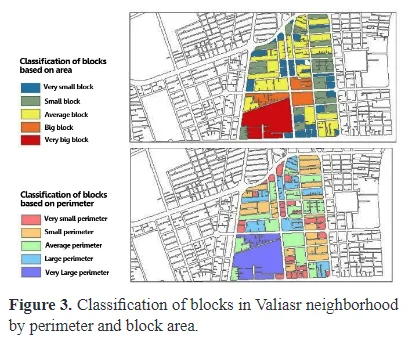
The numerous benefits of walking, as one of the healthiest, simplest, and most cost-effective modes of transportation, have prompted many urban researchers to identify influential factors in pedestrian-oriented urbanism. These efforts aim to transform urban areas, including neighborhoods, into conducive environments for walking,

Graphical abstract for Utilizing Space Syntax Techniques to Understand the Relationship Between Spatial Configuration and Walkability in Urban Neighborhoods (Case Study: Valiasr Neighborhood, Tehran)
Read article →↓ PDF Cite2,145 views1,379 downloads