Search this journal

Search by title, author, DOI or keyword.

Search Results

32 articles

Assessment of Strength and Bending of Concrete Containing Crushed Glass and Fibers

Ali Akbar Firoozi, Ali Asghar Firoozi, Mahongo Dithinde, Obakeng Bome

New Environmentally-Friendly Materials · 1-11 · 10.55121/nefm.v3i1.55

Abstract This paper presents proposed investigations of the influence of crushed glass and fibers on the mechanical properties of concrete. Conventional concrete has lack tension in order to improve its flexural strength and compressive strength. This study has adopted the addition of PET fibers and recycled waste glass fibers

Read article →↓ PDF Cite887 views764 downloads

Hybrid Bio-Inorganic Materials for Environmental Remediation

Sher Wali Khan, Rifhat Bibi

New Environmentally-Friendly Materials · 73-88 · 10.55121/nefm.v2i1.858

Environmental pollution from heavy metals, persistent organic compounds, and emerging contaminants poses a growing threat to ecosystems and human health. Remediation processes have typically been associated with high costs, low selectivity, and secondary wastes, prompting a search for greener solutions. Mixed into renewable biop

Read article →↓ PDF Cite883 views565 downloads

Green Nanotechnology for Environmental Sensing and Monitoring

Muhammad Shahbaz Anjum, Ismat Ullah Khan

New Environmentally-Friendly Materials · 56-72 · 10.55121/nefm.v2i1.857

Environmental degradation driven by industrialization, urban expansion, and agricultural intensification demands advanced, sustainable monitoring tools capable of detecting contaminants at trace levels. Green nanotechnology—rooted in the principles of green chemistry—offers a pathway to develop high-performance environmental sen

Read article →↓ PDF Cite873 views570 downloads

Bioreceptive Building Materials for Urban Ecology

Shaista Parveen, Muhammad Tariq

New Environmentally-Friendly Materials · 41-55 · 10.55121/nefm.v2i1.856

Bioreceptive building materials represent an emerging intersection of architecture, ecology, and materials science in which surfaces are intentionally designed to encourage colonization by microorganisms, mosses, lichens, and other organisms. Compared to traditional strategies of seeing biological growth as an act of degradation

Read article →↓ PDF Cite1,196 views1,239 downloads

Advances in Biodegradable Electronic Materials for Wearable Devices

Sajad Hussain, Muhammad Sohail Abbas

New Environmentally-Friendly Materials · 25-40 · 10.55121/nefm.v2i1.855

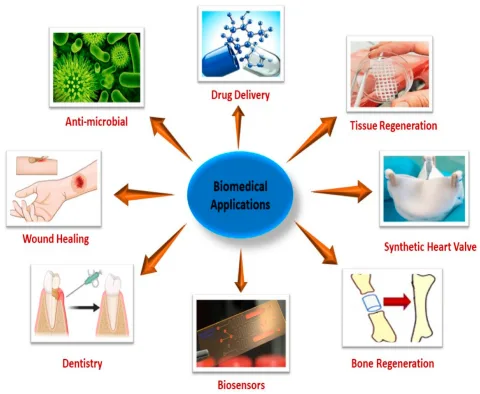
The rapid expansion of wearable electronics has brought significant benefits to healthcare, fitness, and human–machine interaction, but it has also intensified concerns about sustainability and electronic waste. Biodegradable solutions have been an evolutionary concept whereby biodegradable devices can allow reliable functionali

Read article →↓ PDF Cite982 views883 downloads

Degradable Biopolymers from Agro and Food Waste: Potentials and Challenges

Udayamathi M, Bhavani Poojitha V, Harini B, Gowtham S.S., Yuvaraj Dinakarkumar

New Environmentally-Friendly Materials · 10-24 · 10.55121/nefm.v2i1.83

The synthesis of biodegradable plastics from diverse biological resources has garnered significant attention in recent years. The escalating demand for petroleum-based plastics in daily life presents a growing concern due to their non-degradability and production involving hazardous chemicals. The disposal of solid waste is a pr

Read article →↓ PDF Cite1,685 views946 downloads

Eco-Friendly Ground Remediation: Assessing the Efficacy of Plant Fibers, Green Stones, and Antibacterial Agent

Ali Firoozi, Ali Asghar Firoozi

New Environmentally-Friendly Materials · 1-9 · 10.55121/nefm.v2i1.107

Ground contamination poses significant environmental and health challenges globally. Traditional remediation methods, while effective, have often resulted in secondary environmental issues. In light of this, there has been a distinct shift towards more sustainable solutions. This study delves into the potential of three environm

Read article →↓ PDF Cite967 views742 downloads

Sawdust as an Environmentally Friendly Adsorbent

Muhammad Anis Aslam, Idrees Khan

New Environmentally-Friendly Materials · 83-101 · 10.55121/nefm.v1i1.862

Sawdust, an abundant byproduct of the wood processing industry, has gained attention as a sustainable, low-cost adsorbent for water and wastewater treatment. Its lignocellulosic composition—rich in cellulose, hemicellulose, and lignin—provides a variety of functional groups capable of binding a wide range of contaminants, includ

Graphical abstract for Sawdust as an Environmentally Friendly Adsorbent
Read article →↓ PDF Cite1,504 views829 downloads

Recent Advances in Self-Healing Green Composites for Structural Applications

Sher Wali Khan, Muhammad Tariq

New Environmentally-Friendly Materials · 65-82 · 10.55121/nefm.v1i1.861

The development of self-healing green composites offers a sustainable pathway to extend the lifespan of structural materials while reducing environmental impact. This review takes a look at developments in the three principal techniques of self-healing considered namely use of bio-based healing agents, use of microcapsule system

Graphical abstract for Recent Advances in Self-Healing Green Composites for Structural Applications
Read article →↓ PDF Cite896 views802 downloads

Next-Generation Biodegradable Polymers: From Synthesis to Industrial Applications

Ismat Ullah Khan

New Environmentally-Friendly Materials · 42-64 · 10.55121/nefm.v1i1.860

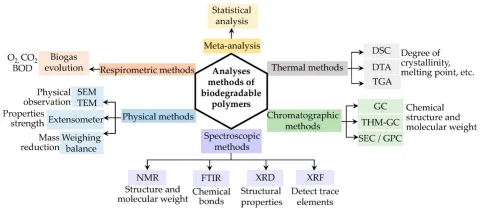
Biodegradable polymers of the next generation have become a hopeful move towards reducing the increasing environmental issues regarding the problem of plastic pollution. Being made out of renewable bio-based feedstock, these polymers also possess the option of naturally degrading within the environment, minimizing plastic waste

Graphical abstract for Next-Generation Biodegradable Polymers: From Synthesis to Industrial Applications
Read article →↓ PDF Cite959 views680 downloads