

Search this journal

Search by title, author, DOI or keyword.

Search Results

4 articles

Sawdust as an Environmentally Friendly Adsorbent

Muhammad Anis Aslam, Idrees Khan

New Environmentally-Friendly Materials · 83-101 · 10.55121/nefm.v1i1.862

Sawdust, an abundant byproduct of the wood processing industry, has gained attention as a sustainable, low-cost adsorbent for water and wastewater treatment. Its lignocellulosic composition—rich in cellulose, hemicellulose, and lignin—provides a variety of functional groups capable of binding a wide range of contaminants, includ
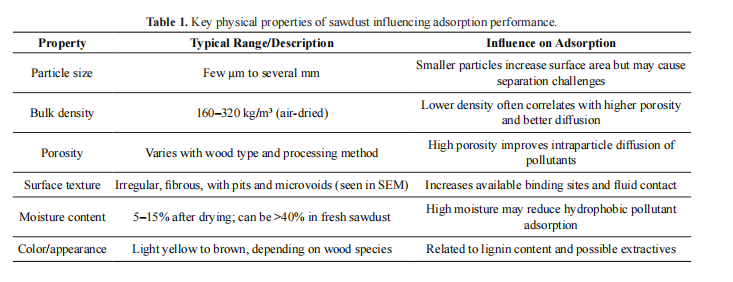
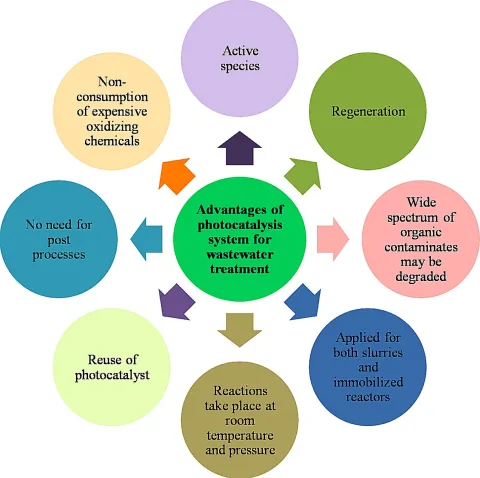
Graphical abstract for Sawdust as an Environmentally Friendly Adsorbent
Read article →↓ PDF Cite1,576 views865 downloads

MOFs as Environmentally Friendly Photocatalysts for Organic Pollutants Degradation

Sajad Hussain, Muhammad Anis Aslam

New Environmentally-Friendly Materials · 24-41 · 10.55121/nefm.v1i1.859

Metal–organic frameworks (MOFs) have gained significant attention as advanced photocatalysts for the degradation of organic pollutants due to their unique structural versatility, high surface area, tunable porosity, and customizable metal–ligand coordination. This review highlights the environmental challenges posed by persisten

Graphical abstract for MOFs as Environmentally Friendly Photocatalysts for Organic Pollutants Degradation
Read article →↓ PDF Cite1,498 views895 downloads

Efficient Photocatalytic Degradation of Crystal Violet Dye Using a Synthesized CdO:V2O5 Nanocomposite in the Presence of Sunlight

Sajid M. Mansoori

New Environmentally-Friendly Materials · 23-34 · 10.55121/nefm.v4i1.413

Materials containing two or more separate phases, at least one of which has nanoscale dimensions, are called nano composites. Coupled semiconductor metal oxides have drawn a lot of interest among these because of their special and improved physicochemical characteristics. These characteristics frequently result from changes in t

Read article →↓ PDF Cite1,086 views677 downloads

A Proof of Concept Zinc-Mediated RDRP of Alanine Acrylamide for Efficient Dye Encapsulation to Clean the Wastewater for Green Environment

Subrata Dolui

New Environmentally-Friendly Materials · 34-40 · 10.55121/nefm.v3i1.297

A PH-responsive synthetic biohybrid biohybrid module poly (L-alanine acrylamide)-blockpoly(methylmethacrylate (PAAla-b-PMMA) diblock biohybrids, based on hydrophilic PAAla and hydrophobic PMAA segments, is developed via direct switching from Zinc (Zn) catalyst polymerization. EbiB was used as an initiator to Zn-mediate Reversibl

Read article →↓ PDF Cite975 views533 downloads