

Search this journal

Search by title, author, DOI or keyword.

Search Results

14 articles

Classical Wisdom Meets Digital Da’wah: Reinterpreting Rumi’s Ethical Messages for the Millennial Muslim Generation

Badrah Uyuni, Mohammad Adnan, Hadi Yasin, Rabiah Al-Adawiyah

Classical Literature · 1–15 · 10.55121/cl.v3i2.562

The digital transformation of religious communication has created new opportunities and challenges for engaging Muslim millennials with classical Islamic spirituality. This research examines how Jalal al-Din Rumi's ethical teachings—rooted in the esoteric (bāṭinī) tradition of Islam and expressed in his major works, Mathnawi, Fi
Read article →↓ PDF Cite673 views790 downloads

The Feminine Form in Saundarya Lahari: A Devotional Perspective

Greeshma Sharma

Classical Literature · 1–11 · 10.55121/cl.v2i2.287

This study presents a close philological and interpretive analysis of the Saundarya Lahari, a canonical Sanskrit hymn attributed to Ādi Śaṅkarācārya and central to the Śākta tradition. Comprising 100 ślokas, the text uniquely fuses devotional poetry with metaphysical doctrine, portraying Goddess Lalitā Tripurasundarī as the embo

Read article →↓ PDF Cite1,000 views1,346 downloads

Translation Methods for Culture-Loaded Words In The "Jiu Ge" of The Chu Ci

Hexin Sun, Chuanmao Tian

Classical Literature · 1–15 · 10.55121/cl.v3i1.549

This study investigates the translation strategies Arthur Waley employed for culture-loaded words in the "Jiu ge" (The Nine Songs) section of the Chu Ci, with Susan Bassnett’s cultural translation theory (centered on cultural functional equivalence and cultural symbol transfer) as the primary analytical framework, integrated wit

Read article →↓ PDF Cite929 views787 downloads

The Illusion of Heroism in the Odyssey: Homer’s Proto-Realist and Ethical Inquiry

Katica Kulavkova

Classical Literature · 26–44 · 10.55121/cl.v2i2.1237

This interdisciplinary reading of Book 22 of Homer’s Odyssey combines classical studies, ethics, narratology, and psychoanalytic theory to show a shift from epic heroism to a post-epic “counter-heroism,” positioning the text as a precursor to literary proto-realism. This shift highlights a chronotope of excessive violence and “n

Read article →↓ PDF Cite1,569 views539 downloads

Translation Methods for Food Culture-specific Expressions in David Hawkes’ English Translation of the Chu ci

Qingling Shi, Chuanmao Tian

Classical Literature · 15-26 · 10.55121/cl.v2i1.153

The Chu ci, a significant legacy of ancient Chinese culture, showcases a diverse range of culinary vocabulary that mirrors the lifestyle of the ancient Chu people and reflects the deep-rooted Jingchu culture of China. This paper focuses on analyzing the translation methods of food-related vocabulary in the Chu ci, with a specifi

Read article →↓ PDF Cite1,456 views1,680 downloads

Towards a Cultural Sociology of the Uses of Classical Literature: Deploying Literary Representations of Rome and the Romans in England between the 15th and 18th Centuries

David Inglis, Christopher Thorpe

Classical Literature · 49-65 · 10.55121/cl.v1i1.115

Studies of receptions of ancient Greek and Roman literature analyze how so-called ‘classical’ texts are variously taken up and deployed by persons existing at later points in history. So far, the nature of such reception has not been conceptualized in an explicitly sociological manner. This paper proposes one way to do that, dra

Read article →↓ PDF Cite1,080 views909 downloads

Nature-Culture Binary versus Ancient Folklore of Bihar (An Eastern Indian State)

Tosha Mallika, Rajiv Ranjan Dwivedi

Classical Literature · 6-14 · 10.55121/cl.v2i1.109

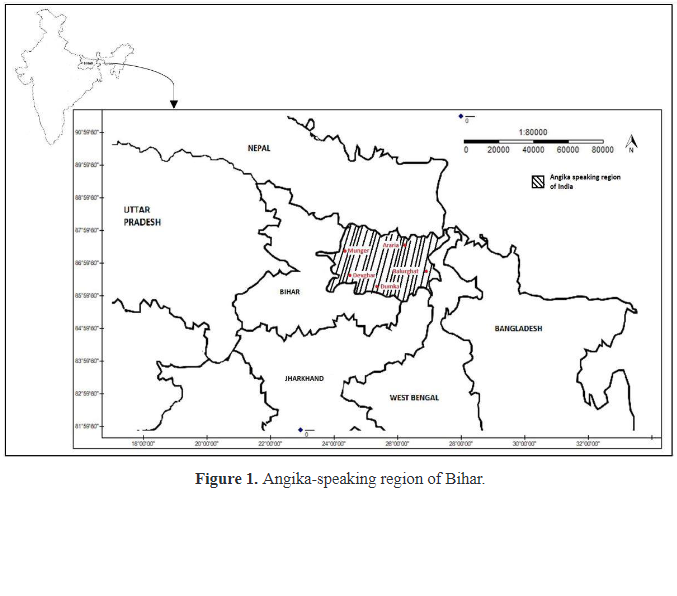
The research article utilizes the ancient folklore of Bihar to build an enhanced perspective on the relationship between culture and nature. Different legends, folk-beliefs, and folk practices have played an immense role in the generation of this analysis. The folklore of the Angika region as shown in the map is the primary sour

Graphical abstract for Nature-Culture Binary versus Ancient Folklore of Bihar (An Eastern Indian State)
Read article →↓ PDF Cite1,383 views1,800 downloads

A Study on Translation Methods and Strategies in the English Translation of the Li Sao by Yang Xianyi and Gladys Yang

Weiwei Yang

Classical Literature · 1-5 · 10.55121/cl.v2i1.108

The poem Li Sao in Chu Ci first created the form of the unique genre “Sao Ti” in Chinese literature, displaying a positive romantic spirit. It has been included in textbooks multiple times and has had a significant impact on the development of Chinese literature. After the Han Dynasty, later literati always highly respected Qu Y

Read article →↓ PDF Cite1,187 views1,020 downloads

On Transliterating the Book of Odes

Geoffrey Sampson

Classical Literature · 24-29 · 10.55121/cl.v1i1.106

The Chinese Book of Odes (詩經), a poetry anthology that is possibly the earliest literary monument in any still-living language, used phonetic effects such as rhyme, metre, and alliteration to achieve its poetic artistry. However, these effects have been largely obliterated by changes in the sounds of Chinese over almost three mi

Read article →↓ PDF Cite1,096 views1,112 downloads

The Art of Translation: Methods to Deal with the Cultural Connotations of Monster Names in the Xiyouji

Wa Yang

Classical Literature · 18-23 · 10.55121/cl.v1i1.95

Xiyouji, one of the four famous works in China and the first romantic long mythological novel by Wu Chengen, contains a large number of monster names that embody numerous Chinese cultures like Confucianism, Taoism and Buddhism. Therefore, it is impossible to avoid dealing with these cultural factors when translating these monste

Read article →↓ PDF Cite1,256 views1,606 downloads