

Search this journal

Search by title, author, DOI or keyword.

Search Results

18 articles

Carbon Farming and Agroforestry: Synergies, Trade‑Offs, and a Decision Framework for Climate‑Smart Landscapes

Muhammad Adil

New Countryside · 83-91 · 10.55121/nc.v5i3.102479

Carbon farming through agroforestry and biochar amendment is widely recognised as a climate‑smart strategy, yet the quantitative integration of their combined effects on soil organic carbon (SOC) and the operationalisation of monitoring, reporting, and verification (MRV) remain fragmented across the literature. This review synth
Read article →↓ PDF Cite515 views281 downloads

Adopting Paludiculture as a Farming Model Resilient to Climate Change: Insights from Farming Communities in the Peatlands of South Sumatra, Indonesia

Ema Pusvita, Lisa Hermawati, Gribaldi

New Countryside · 25-38 · 10.55121/nc.v5i3.1125

Paludiculture, which involves growing crops and managing forests on rehydrated peatlands, is seen as a viable option to balance agricultural production with peatland conservation. However, the adoption of this practice by farmers remains inconsistent. This study investigated factors related to socioeconomic status and behavior t

Read article →↓ PDF Cite914 views565 downloads

Global Pollinator Declines in the Anthropocene: Climate Change, Agriculture, and Food Security

Usama Shoukat, Muhammad Daud, Rifqa Afzal, Isma Gul, Muhammad Aqib, Sajjad Shafeeq, Muhammad Adil

New Countryside · 94-110 · 10.55121/nc.v5i2.1113

Global pollinator populations are declining owing to climate shifts and agricultural expansion, threatening ecosystem stability, crop production, and food security. This review synthesizes empirical findings across diverse pollinator taxa, showing that increased temperature, altered precipitation, and extreme climatic events aff

Read article →↓ PDF Cite981 views650 downloads

Climate Change Impacts and Adaptation Strategies among Pastoral Communities in Yabello District, Borana Zone, Ethiopia

Usman Mohammed Ali, Barudin Jemal, Rametalla Mohamed, Dinsafe Nasro, Nasir Mohammed, Eslieman Maru

New Countryside · 100-115 · 10.55121/nc.v4i2.441

Climate change presents a critical challenge to the sustainability of pastoral livelihoods in the arid and semi-arid regions of Africa, particularly in Ethiopia’s Borana Zone. This study investigates the profound impacts of climate change on pastoral communities in the Yabello District and comprehensively evaluates the adaptatio

Read article →↓ PDF Cite787 views701 downloads

Carbon Farming as a Tool for Climate Resilience in Smallholder Agriculture

Sanusi Mohammed Sadiq, Invinder Paul Singh, Muhammad Makarfi Ahmad, Bashir Sanyinna Sani

New Countryside · 67-81 · 10.55121/nc.v3i2.207

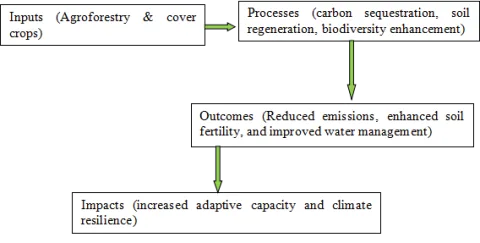
Climate change presents significant challenges to smallholder farmers, whose livelihoods are deeply intertwined with weather patterns, soil health, and overall ecosystem stability. As extreme weather events become more frequent and unpredictable, smallholder agriculture faces increasing risks, including reduced crop yields, soil

Graphical abstract for Carbon Farming as a Tool for Climate Resilience in Smallholder Agriculture
Read article →↓ PDF Cite1,130 views780 downloads

Place-Making through the Creation of Common Spaces in Lima’s Self-Built Settlements: El Ermitaño and Pampa de Cueva as Case Studies for a Regional Urbanization Strategy

Samar Kenworthy, Frank White, Cayon Lee

New Countryside · 7-11 · 10.55121/nc.v2i1.70

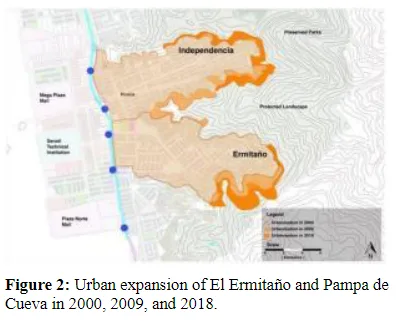
Lima has become the first Peruvian megacity with more than 10 million people, resulting from the migration waves from the countryside throughout the 20th century, which have also contributed to the diverse ethnic background of today’s city. The paper analyzes two neighborhoods located in the inter-district area of Northern Lima:

Graphical abstract for Place-Making through the Creation of Common Spaces in Lima’s Self-Built Settlements: El Ermitaño and Pampa de Cueva as Case Studies for a Regional Urbanization Strategy
Read article →↓ PDF Cite975 views844 downloads

Productivity of Tithonia diversifolia under Edaphoclimatic Conditions of Eastern Cuba

M. Paumier, R.C. Herrera-Herrera, E.O. Toapanta-Mendoza, D.A. González-Aguilera, D.M. Verdecia, J.L. Ramírez, R.S. Herrera

New Countryside · 21-27 · 10.55121/nc.v1i1.24

Livestock in the tropics is characterized by the use of production systems based on low quality pastures, Tithonia diversifolia; due to its productive potential and adequate nutritional value, stands as an alternative for the supplementation of grazing animals. With the objective of evaluating the productive behavior of T. diver

Graphical abstract for Productivity of Tithonia diversifolia under Edaphoclimatic Conditions of Eastern Cuba
Read article →↓ PDF Cite973 views936 downloads

Integrative Approaches to Sustainable Rural Development in India: Bridging Agriculture, Livelihoods, and Living Standards

Ayan Paul

New Countryside · 39-69 · 10.55121/nc.v5i3.1257

India’s rural development paradigm is transitioning from subsistence-oriented approaches toward a multidimensional framework emphasizing sustainability, resilience, technological innovation, and inclusive growth. This study critically examines the evolving landscape of rural development in India through an integrative systems-ba

Read article →↓ PDF Cite908 views720 downloads

Mapping the Role of Millet Mission in Localising SDGs: Evidence from the Indian States with Special Reference to Odisha

Mohit Kumar Bhatter, Arindam Laha

New Countryside · 17-34 · 10.55121/nc.v5i2.1151

Climate change is one of the biggest challenges of the twenty-first century, necessitating adaptation to climate resilient agricultural practices (e.g., millet cultivation) to withstand shocks. The Odisha Millet Mission (OMM) is a unique flagship programme launched by the Government of Odisha in 2017–2018 to improve the entire m

Read article →↓ PDF Cite617 views485 downloads

Nature-based Solutions for Sustainable Food Systems in a Warming World

Shoba Suri, Madhavi Jha

New Countryside · 28-36 · 10.55121/nc.v4i2.488

Climate change, environmental degradation, and biodiversity loss are placing unprecedented stress on global food systems. Rising temperatures, erratic rainfall, increased frequency of extreme weather events, and soil degradation threaten food production and exacerbate existing inequalities in access to food. The urgency to feed

Read article →↓ PDF Cite1,294 views573 downloads