

2023 Vol.1 No.1 cover

Open Access · 2023

2023 Vol.1 No.1


Classical Literature

Browse all issues →

Table of Contents

6 articles

Research on David Hawkes’ English Translation of the Chu Ci from the Perspective of Thick Translation

Qianqian Jiao, Chuanmao Tian

Classical Literature · 1-17 · 10.55121/cl.v1i1.88

This paper firstly discusses the methods of thick translation in Hawkes’ translation which is characterized by the use of various paratexts. The paratexts in the translation belong to the peritext, including the preface, note on spelling, academic introductions, auxiliary illustrations, endnotes, and appendix. An analysis of the
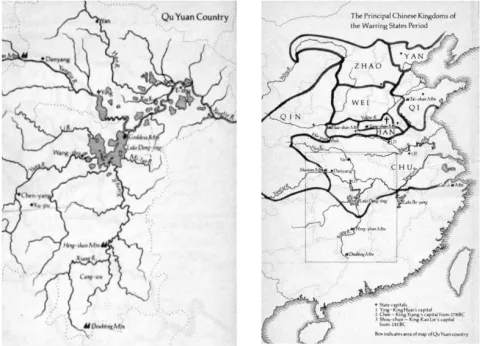
Graphical abstract for Research on David Hawkes’ English Translation of the Chu Ci from the Perspective of Thick Translation
Read article →↓ PDF Cite1,864 views1,172 downloads

The Art of Translation: Methods to Deal with the Cultural Connotations of Monster Names in the Xiyouji

Wa Yang

Classical Literature · 18-23 · 10.55121/cl.v1i1.95

Xiyouji, one of the four famous works in China and the first romantic long mythological novel by Wu Chengen, contains a large number of monster names that embody numerous Chinese cultures like Confucianism, Taoism and Buddhism. Therefore, it is impossible to avoid dealing with these cultural factors when translating these monste

Read article →↓ PDF Cite1,256 views1,606 downloads

On Transliterating the Book of Odes

Geoffrey Sampson

Classical Literature · 24-29 · 10.55121/cl.v1i1.106

The Chinese Book of Odes (詩經), a poetry anthology that is possibly the earliest literary monument in any still-living language, used phonetic effects such as rhyme, metre, and alliteration to achieve its poetic artistry. However, these effects have been largely obliterated by changes in the sounds of Chinese over almost three mi

Read article →↓ PDF Cite1,096 views1,112 downloads

On Cultural Connotations of Animal- and Plant-related Words in Li Sao and Translation Methods

Jiayi Liu, Chuanmao Tian

Classical Literature · 30-40 · 10.55121/cl.v1i1.86

Chu Ci is one of the sources of Chinese literature and the treasure of human civilization. It breaks through the traditional forms of poetry and embodies the language dynamics of Chinese poetry, with a profound impact on the literary creations of later generations. With China vigorously advocating the “going out” of Chinese cult

Graphical abstract for On Cultural Connotations of Animal- and Plant-related Words in Li Sao and Translation Methods
Read article →↓ PDF Cite1,177 views1,588 downloads

On the Inclusive Relation between Translation and Communication in Classics Translation: A Case Study of Chu Ci

Junchi Zhang

Classical Literature · 41-48 · 10.55121/cl.v1i1.97

To clarify the relationship between translation and communication will be of great help to Chinese classics’ “going global” and the establishment of communication studies of translation. Chu Ci (楚辞) is one of the significant Chinese classics. Therefore, to carry out a case study of it will be very meaningful. Through the case st

Graphical abstract for On the Inclusive Relation between Translation and Communication in Classics Translation: A Case Study of Chu Ci
Read article →↓ PDF Cite794 views752 downloads

Towards a Cultural Sociology of the Uses of Classical Literature: Deploying Literary Representations of Rome and the Romans in England between the 15th and 18th Centuries

David Inglis, Christopher Thorpe

Classical Literature · 49-65 · 10.55121/cl.v1i1.115

Studies of receptions of ancient Greek and Roman literature analyze how so-called ‘classical’ texts are variously taken up and deployed by persons existing at later points in history. So far, the nature of such reception has not been conceptualized in an explicitly sociological manner. This paper proposes one way to do that, dra

Read article →↓ PDF Cite1,080 views909 downloads