Research articles

Search by title, author, DOI or keyword.

Search Results

436 articles

Investigating the Construction of a Post-earthquake Shelter Using the Super Adobe Method in Herat, Afghanistan

Tayebeh Nazarian, Asadullah Movahedi, Shakib Shahabi

Urban Planning and Construction · 25-39 · 10.55121/upc.v2i2.151

Earthquakes, as one of the most destructive natural disasters, have always posed significant challenges to humanity. The construction of temporary housing in post-earthquake conditions is very necessary and should be considered as a life-saving measure. To ensure the safety and health of the people affected by the earthquake, it

Graphical abstract for Investigating the Construction of a Post-earthquake Shelter Using the Super Adobe Method in Herat, Afghanistan
Read article →↓ PDF Cite1,830 views1,358 downloads

When the Bear Comes to Town: How the City Could Create Nature

Rob Roggema, Diego Rodriguez, Nico Tillie

Urban Planning and Construction · 1-24 · 10.55121/upc.v2i2.147

The relationship between humans and nature is in permanent change. Where the city and nature used to be seen as enemies that needed to be kept away from each other, the current paradigm looks at a more symbiotic relationship. In this, man is seen as part of nature, and the city is seen as a determining factor in providing condit

Graphical abstract for When the Bear Comes to Town: How the City Could Create Nature
Read article →↓ PDF Cite1,502 views783 downloads

Assessment of Strength and Bending of Concrete Containing Crushed Glass and Fibers

Ali Akbar Firoozi, Ali Asghar Firoozi, Mahongo Dithinde, Obakeng Bome

New Environmentally-Friendly Materials · 1-11 · 10.55121/nefm.v3i1.55

Abstract This paper presents proposed investigations of the influence of crushed glass and fibers on the mechanical properties of concrete. Conventional concrete has lack tension in order to improve its flexural strength and compressive strength. This study has adopted the addition of PET fibers and recycled waste glass fibers

Read article →↓ PDF Cite887 views764 downloads

Cultural Heritage Service Design and Experience Innovation: A Case Study of Taiwan

Wai-Kit Ng, Chun-Liang Chen, Jhih-Ling Jiang, Ying-Shueh Shih

Cultural Arts Research and Development · 1-11 · 10.55121/card.v4i1.120

This paper delves into the evolving landscape of community engagement, exploring innovative methods to enhance the involvement and awareness of young individuals. Employing a comprehensive content analysis through a multiple case study approach, this research investigates cultural heritage initiatives in Taiwan, emphasizing the

Read article →↓ PDF Cite2,386 views1,407 downloads

Double Skin Façades and IoT: A Review of Their Role in Building Energy Conservation and Natural Ventilation

Lachhman Das Khatri, Chalin Anakin, Anderson Noah, Sharma Prashansa, Ankon Lamia Tasnim

Urban Planning and Construction · 11-19 · 10.55121/upc.v2i1.140

Double skin façades and the Internet of Things (IoT) are pivotal in enhancing a structure’s energy efficiency and natural ventilation. Their impact, however, varies based on design size and geographical location, prompting an exploration of the nuanced interplay between IoT technology and energy savings across diverse building t

Graphical abstract for Double Skin Façades and IoT: A Review of Their Role in Building Energy Conservation and Natural Ventilation
Read article →↓ PDF Cite1,080 views866 downloads

A Mobile and Height-adjustable Smoker for Calming Giant Honeybees (Apis dorsata)

K.M.N.M. Jayasena, P.D. Kahandage, E.J. Kosgollegedara, U.G.A.I. Sirisena, N.D.S.L. Senevirathne

New Countryside · 8-16 · 10.55121/nc.v3i1.126

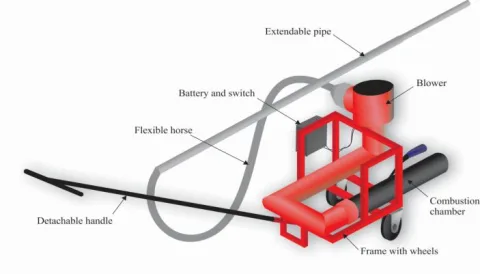
The giant honeybees (Apis dorsata) plays an important role as pollinators, which are vital in plant reproduction. They help the forest and perennial crops by mediating speciation, promoting genetic diversity, and contributing to ecosystem stability. They live in large colonies with vertical comb and commonly make nests in natura

Graphical abstract for A Mobile and Height-adjustable Smoker for Calming Giant Honeybees (Apis dorsata)
Read article →↓ PDF Cite1,474 views903 downloads

Using IoT in Double Skin Facades toward Thermal Comfort: A Review

Ali Moazzeni Khorasgani, Niloofar Zarearsanjani, Arlyn Rodriguez

Urban Planning and Construction · 1-10 · 10.55121/upc.v2i1.131

Integrating the Internet of Things (IoT) into building design and operation has ushered in a new era of sustainable architecture and enhanced occupant comfort. This paper presents comprehensive case studies focused on the application of IoT technology in the context of double-skin facades, explicitly focusing on achieving and op

Graphical abstract for Using IoT in Double Skin Facades toward Thermal Comfort: A Review
Read article →↓ PDF Cite1,921 views1,152 downloads

Hybrid Bio-Inorganic Materials for Environmental Remediation

Sher Wali Khan, Rifhat Bibi

New Environmentally-Friendly Materials · 73-88 · 10.55121/nefm.v2i1.858

Environmental pollution from heavy metals, persistent organic compounds, and emerging contaminants poses a growing threat to ecosystems and human health. Remediation processes have typically been associated with high costs, low selectivity, and secondary wastes, prompting a search for greener solutions. Mixed into renewable biop

Read article →↓ PDF Cite883 views565 downloads

Green Nanotechnology for Environmental Sensing and Monitoring

Muhammad Shahbaz Anjum, Ismat Ullah Khan

New Environmentally-Friendly Materials · 56-72 · 10.55121/nefm.v2i1.857

Environmental degradation driven by industrialization, urban expansion, and agricultural intensification demands advanced, sustainable monitoring tools capable of detecting contaminants at trace levels. Green nanotechnology—rooted in the principles of green chemistry—offers a pathway to develop high-performance environmental sen

Read article →↓ PDF Cite873 views570 downloads

Bioreceptive Building Materials for Urban Ecology

Shaista Parveen, Muhammad Tariq

New Environmentally-Friendly Materials · 41-55 · 10.55121/nefm.v2i1.856

Bioreceptive building materials represent an emerging intersection of architecture, ecology, and materials science in which surfaces are intentionally designed to encourage colonization by microorganisms, mosses, lichens, and other organisms. Compared to traditional strategies of seeing biological growth as an act of degradation

Read article →↓ PDF Cite1,197 views1,241 downloads